
Cavity Drain vs Tanking in Birmingham (Which Suits Your Cellar?)
Cavity drain vs tanking explained: how each cellar system works and when to choose it. A plain guide from our Basement Waterproofing specialists in Birmingham.
Cellars in older Birmingham homes can be dry, damp or properly wet, and the right fix depends on which one you have. At Eco Damp Proofers, we cover Birmingham and the West Midlands, and we’re often asked whether a cellar needs tanking or a cavity drain system. This guide explains the difference between cavity drain vs tanking, why the cause matters more than the product, and how to judge what your space needs. Call us on 0121 330 2385 if you’d like a second opinion.
What is the difference between tanking and a cavity drain?
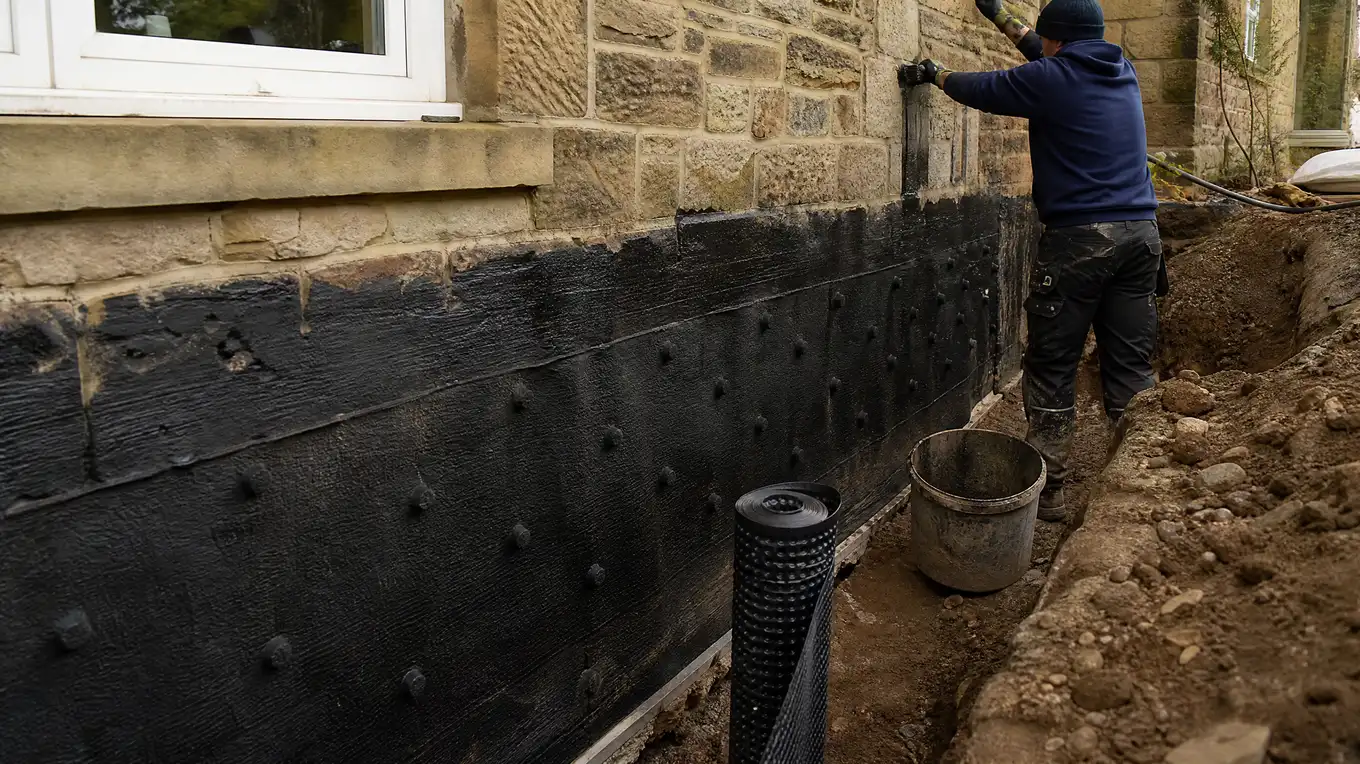
Tanking stops water at the wall: a waterproof coating or slurry is applied to the masonry to keep moisture out. A cavity drain membrane does the opposite. It accepts that some water will get in, then channels it behind a studded plastic sheet to a sump, where a pump removes it.
Both approaches are recognised under BS 8102:2022, the British Standard code of practice for protecting below-ground structures against water ingress (BSI, 2022). The standard describes three types of protection: barrier (tanking), structurally integral, and drained (cavity drain). Which one is suitable depends on how the cellar will be used and how much water you’re dealing with.
Why tanking can fail in older Birmingham cellars
Tanking relies on a sound surface to bond to. Victorian and Edwardian cellars in areas such as Handsworth, Moseley and Erdington often have soft lime mortar, uneven brickwork and decades of salt contamination. Slurry applied to walls like that can blister or peel.
There’s a second problem. Tanking holds water back, so any pressure from the ground behind the wall stays there. If the water has nowhere to go, it can push at the coating or find a weak spot, such as a floor joint or a pipe entry.
Birmingham’s weather doesn’t help. The Met Office records about 809 mm of rain a year at Winterbourne, with 1 mm or more falling on about 133 days (Met Office, 1991–2020 averages). That’s a lot of wet ground around a below-ground wall.
Tanking still has its place. In a sound, regular wall with a modest moisture problem, and where the structure can take it, it can be a sensible and cheaper option.
When a cavity drain system makes more sense
A cavity drain membrane suits cellars where water ingress is persistent, walls are uneven or the masonry is old and crumbling. Because it doesn’t need to bond to the wall, it copes with surfaces that tanking can’t. The water is managed rather than fought.
The trade-off is the sump and pump. These need power, occasional checking and a maintenance plan, which is a genuine consideration if you’re a landlord or buying a house with an existing system. We’d always tell you plainly if the pump is the weak link.
Cost is another factor. Cellar tanking typically costs £100–£200 per square metre (Checkatrade damp proofing cost guide, 2026). Cavity drain installations usually sit in a similar bracket, but the sump, pump and any electrical work can shift the final figure, so we give a written quote before any work starts, including cheaper options where they exist.
Check the cause before choosing a system
Not every damp cellar needs either system. Before anything goes on the walls, we look at the things that often cause the trouble:
- Blocked or leaking gutters and downpipes discharging beside the wall
- Failed pointing letting rain through the brickwork
- Soil or paving built up above the level of the cellar’s damp-proof course or air bricks
- Poor ventilation, which leads to condensation rather than leaks
Condensation is easy to mistake for a water leak. Serious condensation was the most common form of damp in English homes in 2024 (3%), ahead of penetrating damp (2%) and rising damp (1%) (English Housing Survey 2024 to 2025, MHCLG). Fixing a gutter or a ventilation problem costs far less than a membrane, and we’d rather tell you that than sell you something you don’t need.
Once the cause is clear and the cellar is going to be used as living space, storage or a utility room, the choice becomes easier. Our basement waterproofing page explains how we survey and specify the work.
Key takeaways
- Tanking blocks water at the wall; a cavity drain collects it and pumps it away.
- BS 8102:2022 recognises both approaches, and the right choice depends on water levels and wall condition.
- Older, uneven or salt-laden cellar walls often suit a cavity drain better than tanking.
- Tanking typically costs £100–£200 per square metre (Checkatrade, 2026).
- Gutters, pointing, ground levels and ventilation should be ruled out first.
Not sure which your cellar needs?
Call 0121 330 2385 to speak to our local team, open 7 days a week, 9am–7pm. Call for a damp survey and we’ll find the cause first, then explain your options in plain English. You can also read more about our basement waterproofing service.
Frequently Asked Questions
Tanking is often the cheaper option on a sound wall, with cellar tanking typically costing £100–£200 per square metre (Checkatrade damp proofing cost guide, 2026). A cavity drain adds a sump and pump, which can raise the total. We give a written quote that compares the options.
Often yes, if the right system is installed and the space is ventilated, heated and finished properly. BS 8102:2022 grades protection by how a below-ground space will be used. Tell us your plans at the start so the specification matches the use.
Waterproofing alone usually doesn't need planning permission. Converting a cellar into habitable space can trigger Building Regulations requirements covering things like ventilation, escape routes and ceiling height. Check with Birmingham City Council's building control team before you start a conversion.
Damp, mould or a musty smell? Let's find the cause.
Call us 7 days a week, 9am–7pm. We can usually do a free survey within 3 working days, find what's really causing it, and give you a written quote before any work starts.