
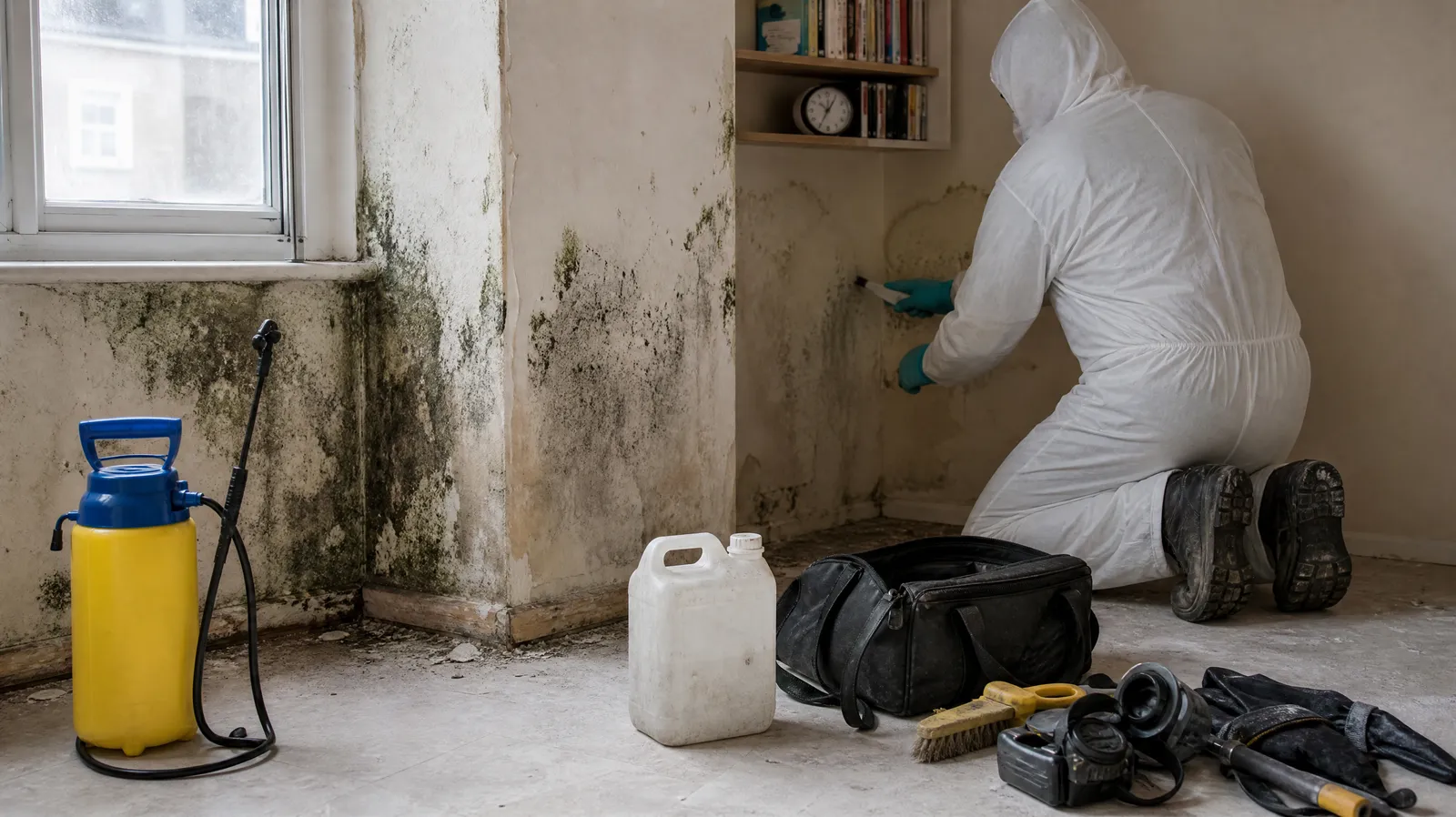
Damp and Mould in Rented Homes: Awaab's Law and Who Fixes What
Mould in a rented home? Learn how Awaab's Law works, who fixes what, and why the cause comes first, plus our Black Mould Removal and Treatment service.
If you rent a home in Birmingham, or let one out, mould on a bedroom wall raises an immediate question: whose job is it to deal with it? Awaab’s Law has changed the answer for social tenants, and it has sharpened expectations across the rest of the rented sector too. At Eco Damp Proofers, we’re a local team covering Birmingham and the West Midlands, and we see both sides of this. This guide explains the rules in plain English, and why finding the cause comes before any treatment. To talk it through, call 0121 330 2385, open 7 days, 9am to 7pm.
Why damp in rented homes is such a common problem
Damp is more common in rented housing than in owner-occupied homes. The English Housing Survey 2024 to 2025 (MHCLG) found damp in 10% of privately rented homes and 7% of social rented homes, compared with 4% of owner-occupied homes.
Birmingham’s housing makes this easy to understand. Victorian and Edwardian terraces in Handsworth and Erdington, interwar semis and post-war flats all have their own weak spots, from tired pointing to cold walls and poor airflow. Add about 133 wet days a year (Met Office, 1991–2020 averages) and any small defect gets tested often.
The same survey found serious condensation was the most common type of damp in English homes (3%), ahead of penetrating damp (2%) and rising damp (1%). So a black patch in a corner is far more likely to be a ventilation or heating issue than rising damp.
What does Awaab’s Law actually require of landlords?
Awaab’s Law applies to social landlords in England. Since 27 October 2025, they must investigate significant damp and mould hazards within 10 working days, send the tenant a written summary within 3 working days of the investigation, and complete safety works within 5 working days. Emergency hazards must be dealt with within 24 hours (GOV.UK, Awaab’s Law guidance for social landlords, 2025).
For social tenants, that means:
- Report the problem in writing, with dated photos, so there is a record.
- Expect a proper investigation rather than advice to “wipe it down”.
- Ask for the written summary if you haven’t received one.
- Escalate to the landlord’s complaints process, then the Housing Ombudsman, if deadlines pass.
Private landlords are not yet bound by these exact timescales, but they still have duties under the Homes (Fitness for Human Habitation) Act 2018 and the Housing Health and Safety Rating System. A damp, mouldy home can be unfit to live in whoever owns it. Sensible private landlords treat the Awaab’s Law timetable as the benchmark.
Who fixes what: landlord or tenant?
The split usually follows the cause.
Landlord’s responsibility: leaking gutters, failed pointing, damaged roofs, high external ground levels, broken extractor fans, rising or penetrating damp, and anything affecting the structure or services.
Tenant’s responsibility: reasonable day-to-day habits, such as opening windows after showers, using extractor fans, keeping furniture slightly off cold walls and not drying washing on radiators in a closed room.
In practice, many cases are a mix. Inadequate ventilation matters here: of English homes with inadequate ventilation, more than 60% had a damp problem (English Housing Survey 2023 to 2024, MHCLG). If the extractor is broken or missing, that’s a landlord fix. Blaming “lifestyle” without checking the building is rarely fair.
Health is another reason not to wait. Children, older people, people with existing health conditions and people with weakened immune systems are at greater risk from damp and mould (GOV.UK, MHCLG and UKHSA). Tell your landlord if anyone in the household falls into those groups.
Getting the cause found before anyone treats the mould
Washing or painting over mould, whether by a tenant or a landlord’s contractor, treats the symptom. It will come back unless the moisture source is dealt with first. We look at gutters, pointing, ground levels and ventilation before we recommend anything more involved, and a written quote comes before any work starts, with cheaper options where they exist.
Where mould has taken hold, specialist cleaning and treatment can be worthwhile. Our Black Mould Removal and Treatment page explains what that involves. For rough budgeting, Checkatrade’s mould removal cost guide (2026) puts professional removal at around £300 per room and a mould inspection at around £100.
Key takeaways
- Awaab’s Law sets strict deadlines for social landlords: 10 working days to investigate, 3 to summarise, 5 to complete safety works (GOV.UK, 2025).
- Private landlords still have legal duties on fitness for habitation.
- Condensation is the most common damp type, so check ventilation first.
- Report problems in writing and keep photos and dates.
- Treat the cause, not just the visible mould.
Need someone to look at it?
Whether you’re a tenant gathering evidence or a landlord who wants the cause found properly, call us on 0121 330 2385 for a damp survey, open 7 days, 9am to 7pm.
Frequently Asked Questions
Not in the same way. The 10, 3 and 5 working-day timescales currently apply to social landlords in England (GOV.UK, 2025). Private tenants are still protected by the Homes (Fitness for Human Habitation) Act 2018, which requires a home to be safe and free from serious hazards, including damp and mould.
We'd advise against it. Withholding rent can put your tenancy at risk. Report the problem in writing, keep evidence, and contact your local council's environmental health team or Shelter for advice. Councils can inspect and require landlords to carry out repairs.
No. Mould can come from a building fault, from everyday moisture with poor ventilation, or both. A proper inspection should identify which. A leaking gutter is the landlord's job; reasonable airing and heating habits are shared. Fair diagnosis protects both sides.
Damp, mould or a musty smell? Let's find the cause.
Call us 7 days a week, 9am–7pm. We can usually do a free survey within 3 working days, find what's really causing it, and give you a written quote before any work starts.