
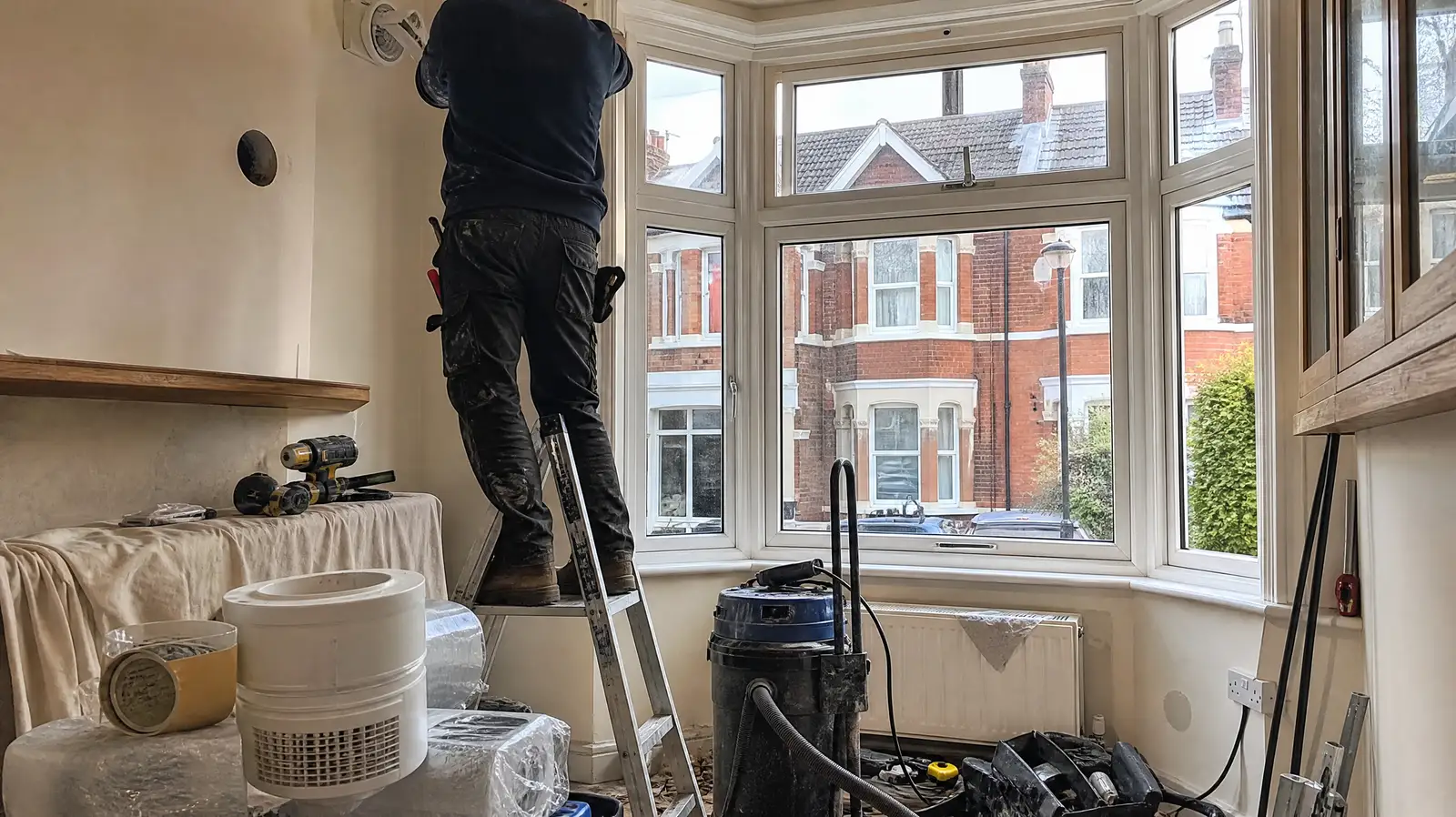
Positive Input Ventilation in Birmingham (Drier Air, Less Condensation Mould)
Positive Input Ventilation (PIV) Installation in Birmingham: cut condensation and mould for a drier, fresher home. Local team. Written quote before any work.
Call for a damp survey: 0121 330 2385 Open 7 days, 9am–7pm. We find the cause first and only recommend what your home needs. Covering Birmingham and the West Midlands.
Eco Damp Proofers is a local team that would rather tell you the truth than sell you the wrong job. If your windows run with water, black mould keeps returning to bedroom corners and wiping it off only buys you a fortnight, you may have a ventilation problem rather than a wall problem. Positive input ventilation is often the quiet fix: a small fan gently refreshes the air in your home, pushing out stale, moist air before it settles on cold surfaces. It sits within our wider condensation control and ventilation service, and this page goes deep on the PIV route specifically.
Understanding the Problem Before the Fan
Condensation is the most common type of damp in English homes. The English Housing Survey 2024 to 2025 (MHCLG) found serious condensation affected 3% of homes, ahead of penetrating damp at 2% and rising damp at 1%. The English Housing Survey 2023 to 2024 (MHCLG) also found that more than 60% of homes with inadequate ventilation had a damp problem.
Before we suggest any equipment, we rule out the usual suspects: blocked gutters, failed pointing, high ground levels and leaking pipes. We also ask how you dry washing, whether extractors work and how the house is heated. A fan is only the answer when moist indoor air is the real culprit. If it isn’t, we will tell you.
How a PIV Unit Works
A PIV unit is a quiet, low-powered fan that draws in fresh air and delivers it gently into your home. In most houses, it sits in the loft and takes air from the roof space through a filter. The air is warmed slightly and fed through a diffuser in the ceiling of the landing or hallway.
That gentle flow slightly raises the air pressure inside the house. Stale, humid air is pushed out through the natural gaps around doors, windows and the building fabric. Moisture from cooking, showers and breathing is carried away before it can condense on cold walls, window reveals and behind furniture.
It runs continuously, so it works all day without you thinking about it. Most units have a boost setting and adjustable speeds. Because the whole house is ventilated, it tackles the problem in every room, not just the bathroom.
Installation should respect Building Regulations Approved Document F (ventilation), and we explain how any proposed system fits those requirements.
Loft Units and Wall Units for Flats
Loft units suit houses with an accessible loft space, which covers most Victorian and Edwardian terraces, interwar semis and later homes across Erdington, Sutton Coldfield, Moseley and Handsworth. A loft ventilation unit is fitted above the landing, with a ceiling diffuser below. Per Checkatrade’s PIV installation cost guide (2024), a loft unit usually takes 1 to 3 hours to fit.
Wall units are designed for flats and homes with no usable loft, which is common in post-war blocks and many converted properties. The unit is mounted high on an internal wall, usually in a hallway or main living space, and draws air through a small hole in the external wall. It does the same job as a loft unit but is slightly more visible, so we discuss the position with you first.
Flats can involve extra considerations, such as leasehold permissions, shared walls and who owns the external wall. We talk these through before quoting, so there are no surprises. If your property is better suited to a different ventilation approach, we will say so.
Who Benefits Most
- Homes with condensation and mould on bedroom walls, ceilings and window frames
- Victorian and Edwardian terraces where chimneys have been sealed and windows replaced
- Interwar semis with upgraded double glazing but no extra ventilation
- Post-war flats with limited airflow
- Landlords dealing with a tenant’s damp complaint who want a practical, lasting measure
- Buyers whose survey flagged condensation or mould
Birmingham’s climate adds to the load. The Met Office (1991–2020 averages, Winterbourne) records about 809 mm of rain a year here, with 1 mm or more falling on about 133 days a year. That means a lot of wet weather, damp washing and closed windows.
Step by Step: From Survey to Completion
- Survey and diagnosis. We inspect the property, take moisture readings and check gutters, pointing, ground levels and existing extractors.
- Written quote. You receive it before any work starts, including cheaper options where they exist.
- Choosing the unit and position. We agree where the unit and diffuser will go and which model suits your home.
- Fitting. In a typical house, we install the loft unit, run the ducting and fit the ceiling diffuser. Wall units are mounted and connected through the external wall.
- Setting up. We adjust the airflow, explain the controls and show you how to access the filter.
- Aftercare advice. We suggest a few small habits, such as keeping furniture off external walls, that help the system do its job.
What You’ll Gain
- Fewer condensation problems. Moisture is carried away before it settles on cold surfaces.
- A fresher home. The air feels less stale, especially in bedrooms.
- Whole-house coverage. One unit ventilates every room, unlike a single extractor.
- Low disturbance. There is no need to open windows in winter.
- A stronger case for sale or letting. A resolved condensation problem, backed by paperwork, helps with buyers, mortgage lenders and tenants.
Damp and mould can affect everyone, but children, older people and those with existing health conditions are at greater risk (GOV.UK, MHCLG and UKHSA). A well-ventilated home is a calmer, healthier place to live.
Running Costs and Filters
A PIV unit runs all day, but it is designed to be economical. Most units use a small, low-wattage fan, so running costs are modest, though the exact figure depends on the model and your electricity tariff. We can give you the figures for the specific unit we recommend.
The main upkeep is the filter. According to Checkatrade’s PIV installation cost guide (2024), filters are replaced every 3 to 5 years at around £35. You do not need to service it regularly, though it is sensible to check the filter and that the loft intake is not blocked by insulation or stored items.
PIV is not a heater, and in a cold home the incoming air can feel cooler, particularly near the diffuser at first. Many models include a heating element or adjustable speed to manage this. We talk through your preferences before fitting, so the system suits how you live. Combining it with sensible heating and good habits gives the best results.
Investment Guide
According to Checkatrade’s PIV installation cost guide (2024), supplying and installing a PIV unit costs £763 to £1,750, about £900 on average. The price of damp-related work generally depends on the type and severity of the problem, the method, the size of the area, access and location (Checkatrade damp proofing cost guide, 2026).
For comparison, Checkatrade’s mould removal cost guide (2026) puts professional mould removal at around £300 per room, and a mould inspection at around £100. Fitting ventilation and treating existing mould are separate jobs, and we will quote for only what is needed.
Our survey looks at the whole property, not just the damp patch. You receive a written quote before any work starts, and we include cheaper options where they exist. A typical loft installation is completed in a single visit. Call 0121 330 2385 to arrange a visit.
Questions We Get Asked
How much does a PIV unit cost in Birmingham?
Checkatrade’s PIV installation cost guide (2024) gives £763 to £1,750 for supply and installation, about £900 on average. Your price depends on the model, loft access and whether a loft or wall unit is needed. We give a written quote before any work starts, so you know the figure in advance.
Will positive input ventilation get rid of my mould?
It tackles the cause of condensation mould by reducing moisture in the air, but it does not clean mould that is already there. Existing mould should be treated and surfaces dried. Where leaks, blocked gutters or other defects contribute, those must be fixed too. We check all of this at the survey.
Is PIV suitable for a flat?
Often, yes. A wall-mounted unit can work where there is no loft, though it depends on the layout, the external wall and any lease or building permissions. We assess this during the survey and tell you plainly if another approach would suit your flat better.
Will it make my home colder or noisy?
PIV units are designed to be very quiet, and the airflow is gentle. In winter, incoming air can feel cooler, especially at first, but heated models and adjustable settings help. We set the airflow up with you before we leave, so it suits your home.
Does it meet Building Regulations?
Ventilation work should follow Building Regulations Approved Document F. We explain how the proposed system fits, and where the problem is rented housing, the Housing Health and Safety Rating System (HHSRS) treats damp and mould growth as a hazard landlords must address. Social landlords also have timescales under Awaab’s Law.
Talk to a Local Team
If condensation keeps coming back, a short conversation can save you money. We will tell you plainly whether a PIV unit, a simpler repair or something else is the right fix. Call for a damp survey on 0121 330 2385, open 7 days, 9am–7pm. We cover Birmingham, Sutton Coldfield, Moseley, Handsworth, Solihull and Walsall. Prefer to write? Use the enquiry form and we will call you back.


How It Works
From initial survey to completion — here’s what to expect when you work with us.
-
Call or send a message
Tell us what you can see. We ask a few questions and book a visit at a time that suits you, any day 9am–7pm.
-
We find the cause
We check inside and out: readings across the walls, gutters, pointing, ground levels, ventilation and timbers.
-
Written quote
You get the cause, the fix and the price in writing, including any cheaper options, before any work starts.
-
We do the work
Our own team carries out the treatment, leaves the house tidy and explains how long the walls need to dry.
Damp, mould or a musty smell? Let's find the cause.
Call us 7 days a week, 9am–7pm. We can usually do a free survey within 3 working days, find what's really causing it, and give you a written quote before any work starts.